

The African Student Association held their 3rd annual Mother Africa Showcase this spring in the Gerald W. Lynch Theater, showcasing different parts of the African diaspora through fashion, music, dance, and a skit. The event drew over 100 attendees.
In just one night, the showcase proved that African culture is not a monolith but an array of stories waiting to be told.
The show was a representation of African cultures’ diversity and presence on John Jay’s campus. Many different cultures were represented throughout the show and even in the audience, with students representing Ghana, Nigeria, Senegal, and more.
Grace Adewunmi, 19, a Criminal Justice major and a coordinator for the showcase, played a major role in bringing the show together.
She taught participants how to walk, explained expectations, and ensured everything ran smoothly. With her prior experience in modeling for previous showcases, one of her main focuses was working with models and helping them build confidence on stage.
For Adewunmi, the show was more than just a performance.
“I am aware of the perception put on Africa and the lack of willingness to learn about us beyond food and music,” she said. “I loved that we showcased our traditions and culture through fashion.”
Her most memorable moment was a representation of all the hard work she put into this event.
“My favorite part of the night was the Nigeria dance segment,” she said.
She said the performance illustrated her vision and passion coming together.
“Being part of something that allows designers and models to shine while representing Africa as a whole was a beautiful experience” she said.”
She worked closely to create a piece that highlighted the evolution of Nigeria by incorporating Yoruba and Igbo influences, calling the final performance “a beautiful masterpiece.”
Katriel Boateng, 20, a Forensic Psychology major, described her role as flexible but essential.
“My role in the fashion show was to fill in where help was needed,” she said. “That included managing music, recording model walks, and giving feedback.”
She emphasized the lack of representation of African culture both on campus and in broader media spaces and how important more representation is.
“The fashion show created a space where we could showcase our different cultures and identities and be celebrated,” she said. “We often see Africa looked down upon, but we showcased a different narrative through fashion, history, and dance.”
Boateng also played a key role in the Ghana segment, which focused on storytelling.
“I was the main coordinator for the Ghana skit,” she said. “Since there was no speaking, I had to make sure the movements captured the story.”
Inspired by 1970s Ghana and the “Operation Feed Yourself” initiative, a national movement aimed at encouraging local food production and self-sufficiency, the segment blended history, fashion, and culture.
“We wanted to educate the audience while still making it engaging,” she said.
In-Deria Barrows, 21, a graduating senior majoring in Cell and Molecular Biology and model in the showcase, participated in multiple segments throughout the night, modeling for a brand called ANNA, performing in the Nigerian dance, and taking part in the African cultural clothing wear segment.
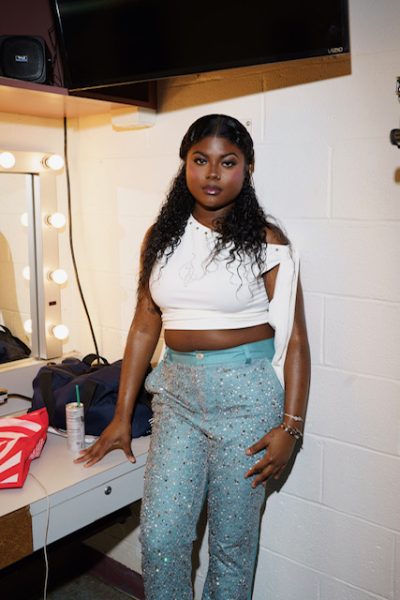
Barrows said she truly enjoyed the experience, especially after attending the showcase as an audience member in previous years before deciding to participate in her final year of college.
“My favorite part was doing it with my friends and sharing a lot of laughs throughout the experience,” she said.
She said if she could go back, she would have gotten involved when the show first began.
Barrows described the overall atmosphere as welcoming and said the experience helped her grow both personally and on stage.
“We learned how to perfect our walks in heels and what poses work best for us,” she said. “It was really a learning and confidence-building experience.”
Aminata Bah, 21, a Criminal Justice major, worked behind the scenes to keep the show running smoothly and the models in high spirits.
“My role was to make sure the models knew what to do and weren’t nervous — on the day of the show, I stayed in the dressing room helping everyone get ready and updated.” she said
For her, this event resonated deeply.
“As an African who came to America not knowing many people who spoke my language or shared my culture, this show meant a lot,” she said. “It brought everyone together and reminded me how connected we are.”
Despite the many challenges that come with planning a show of this caliber, such as scheduling and last-minute changes, Aminata said the outcome made it all worth it.
“Success for me was seeing everyone come together and confidently perform,” she said. “Watching our vision come to life and seeing the audience enjoy it made everything worth it.”
This showcase was more than just a student-led event. For some, it was a safe space to celebrate their culture loudly and proudly, without fear of judgment or ridicule.
Out of the 50 countries in Africa, no one is exactly the same, and this show was just a small glimpse into the cultural richness that is Africa.