

Most students walk into John Jay College of Criminal Justice expecting classes in criminal justice, law, debates about society, and maybe a long lecture or two. What they probably do not expect is learning how to torch crème brûlée, study why bread rises, or figure out why eggs can go from silky to rubber in seconds. Yet, hidden in the mix of John Jay’s course offerings, is a class doing exactly that, SCI 166: “Chemistry of Cooking.”
The course, taught by Professor Robin Lipner, blends food and science in a way that feels more alive than the average classroom. Students are not just reading notes and memorizing terms. They are cooking, experimenting, tasting, and seeing chemistry happen right in front of them. For many students who never knew it existed, it may be one of the best kept secrets on campus.
While the name may sound like an elective for food lovers, students say the class goes much deeper than recipes and snacks. For Lipner, that’s all she wants students to realize.
“You need a science credit to graduate,” she said. “This class provides that, but also I want people to take something they can actually use in real life.”
That real-life aspect matters more than students might realize at first.
“When people are leaving home and living on their own, it helps to know how to feed yourself,” Lipner said. “Food is expensive, and fast food is not good for you.”
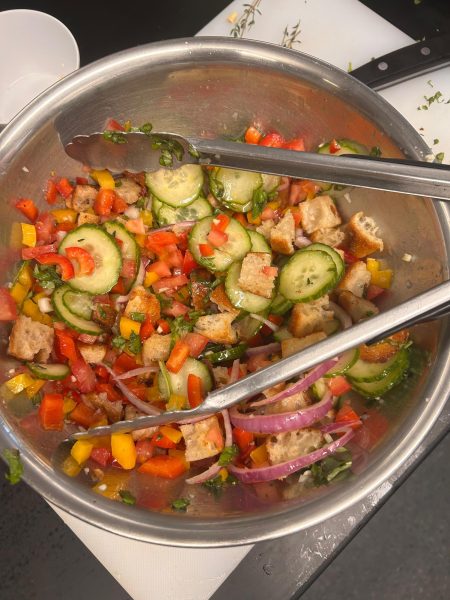
Inside the classroom, that idea shows up quickly. Students are not just following recipes, but they are also learning why things happen. It mixes chemistry, history, trial and error, and real kitchen skills many students may never have had the chance to learn elsewhere.
Jocelyn Martinez, a sophomore majoring in Global History who is currently in the class, said the course helped her become more confident in the kitchen and less afraid of making mistakes.
“It really taught me that messing up food isn’t the end of the world,” Martinez said. “We had to make mashed potatoes for one lab and accidentally undercooked them.”
Initially, she said, the situation felt like a disaster.
“At first it was like ‘ah what do we do?’ like we wasted food, or we were going to get a bad grade,” she said. “But the professor helped us, said we could microwave them and mash them as much as possible, and it eventually worked out, so cooking is really about experience and being flexible.”
Martinez said moments like that made the class feel welcoming instead of stressful.
“It’s fun because you’re learning science, but it doesn’t feel boring,” she said. “You actually get to see what happens, and if something goes wrong, you learn from it.”
That same hands-on energy stood out for another student, Dawn Threat, a sophomore majoring in English, who said the class changed how she looks at cooking altogether.
“Before this class, cooking was just following recipes, it was kind of intimidating,” Threat said. “Now I understand there’s a reason behind everything, like why sauces split, why temperature matters, etc. — it makes you appreciate food more.”
Threat said the atmosphere of the class also makes learning easier.
“We laugh a lot in class,” she said. “Sometimes things come out ugly, sometimes they come out amazing, but either way, you learn something.”
That kind of atmosphere can be rare, especially for students enrolled in courses with more traditional, lecture-style instruction.
“It doesn’t feel like one of those classes where everyone is half asleep. Even though one downside could be foot pains from standing for almost 2 hours,” said Threat.
That balance of science and fun may be what makes the course especially attractive for students looking for something different. Between exams, deadlines, jobs, and long commutes, a class where students can learn life skills while earning credits can feel like a breath of fresh air, even if it could cause a little cramp or two.
Yet, several students around campus said they barely knew the class was even an option.
Joyce Kaloengele, a sophomore majoring in Forensic Science who is not enrolled in the course, said she only recently heard about it and wishes it had been promoted more.
“A class like that is really here?” Kaloengele said. “If I knew earlier, I would’ve looked into it fast.”
She said classes like “Chemistry of Cooking” can especially matter for students who never had access to cooking resources growing up.
“Some people never had anyone teach them how to cook,” she said. “Some people don’t have money to go take outside classes either, so if it’s here through the school, that’s a really good opportunity.”
Her reaction points to something bigger. Many students assume college options are limited to required classes, major classes, and whatever fits the schedule. Sometimes the most interesting opportunities are sitting right there in plain sight.
According to students in the course, “Chemistry of Cooking” doesn’t just stop at preparing meals. Assignments also explore the history of foods, how ingredients developed over time, and what happens down to their chemical bonds during cooking. Students test reactions themselves, watching how acids, proteins, sugars, and heat can completely transform ingredients.
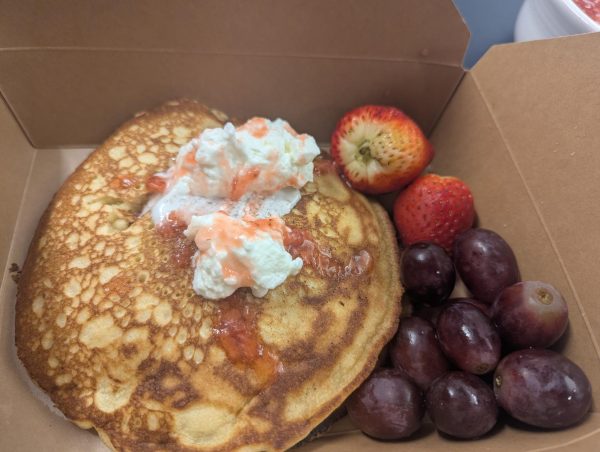
That means a student baking bread isn’t just baking sourdough, they’re studying fermentation. A student caramelizing sugar isn’t just making a tasty sweet treat or dessert, they’re watching chemical changes happen for themselves. Then, suddenly, science feels less like a textbook and more like dinner.
For students overwhelmed by their traditional course loads, this kind of learning can be refreshing. It connects classroom knowledge to something useful, immediate, and honestly delicious, depending on your ability.
The course also reminds students of something college does not always advertise enough. While internships and required credits usually get all the attention, electives like this can leave students with skills that stay long after graduation.
Martinez said that may be the best part of all.
“I feel like you could leave with something real,” she said. “Not just notes for a quiz, but you can leave knowing how to make things, fix mistakes, and actually cook for yourself.”
At a college known for justice studies and criminal law, “Chemistry of Cooking” may sound unexpected. But for students willing to step into the kitchen, it offers something rare: science, history, creativity, confidence, life skills, and a good meal at the end of class.
And for students who are only hearing about it now, registration season may start looking a little more appetizing.