
As fears surrounding immigration and the political climate continue to weigh on immigrant students, one campus program provides a space for open discussion about experiences that are often kept secret.
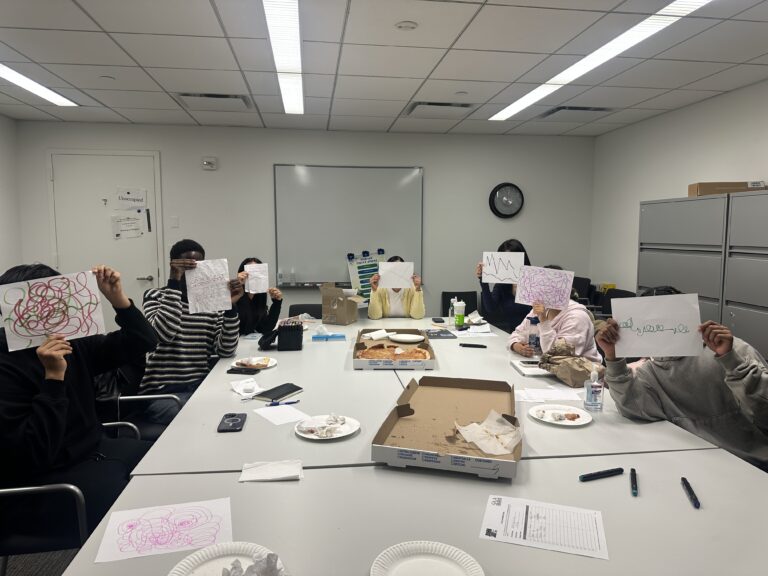
The Healing Circle is a peer support group created through John Jay’s Immigrant Student Success Center and Wellness Center.
The program provides immigrant students with a space to discuss stress, identity, family pressures, and anxiety in a supportive environment.
Mirka Cuapio, a former social work intern at the Counseling Center, helped to create the Healing Circle during the 2024 presidential election.
“I wanted them to have a safe space for them to process [their feelings] openly and have each other,” said Cuapio.
Cuapio said the idea came after noticing students carrying fear and anxiety during the election season, especially as immigration became a central political issue.
She further shared that many students were struggling emotionally but lacked spaces where they could feel understood.
“I think a lot of students and a lot of folks have this misconception of, ‘Why don’t you just get papers or come here the right way,” said Cuapio. “There’s a lot of institutional and immigration systems that are set up a certain way.”
Cuapio wanted the Healing Circle to become a place where students did not have to overexplain themselves to feel supported.
“A lot of students have kept those feelings inside of them,” said Cuapio
According to Cuapio, around 10 to 12 students attended the early meetings, and many later asked if the group would continue beyond the election period.
The group later transitioned into a recurring weekly program with a more private and intimate setting for discussions.
Laura Diaz Crisostomo, a wellness intake specialist and behavioral intervention team coordinator at the Wellness Center, now helps co-facilitate the sessions alongside two master’s of social work interns.
As the group evolved based on students’ needs, the Healing Circle met weekly throughout different semesters.
“We did a short survey asking students, ‘What do you want to get from the Healing Circle? What are things that you want this space to be?” said Crisostomo.
Sessions often begin with grounding exercises, meditation, or creative activities before opening into discussion.
The facilitators intentionally keep the structure flexible, allowing students to guide conversations based on what they are feeling that day.
Some sessions focus on themes selected by students themselves, including identity, stress management, self-care, and discussions surrounding the “American Dream.”
Vritzy Hernandez, a social work intern from Hunter College, shared that many students arrive carrying pressures that extend beyond the classroom.
“There’s definitely been a lot of talk about politically where the United States is and what’s going on with immigration laws,” said Hernandez.
She continued to share the toll these conversation stressors have on students.
“So many of these things create kind of a generalized stress or anxiety that get in the way of being a successful student,” said Hernandez.
Students also help shape the community norms that guide the space, including rules such as confidentiality and respectful conversations.
According to Hernandez, that process helped students feel ownership over the group and encouraged more honest conversations.
John Lendof, a freshman majoring in Law and Society, described the atmosphere of the Healing Circle as welcoming and inclusive.
“We talk about immigration. We talk about stress in class. We talk about the political situation that we’re living [through],” Lendof said. “It isn’t fixed. Anyone could go and talk about anything they want to.”
Lendof said the Healing Circle helped him connect more deeply with both new people and existing friends on campus.
Conversations that began during sessions often continued afterward, allowing students to bond over shared experiences and challenges.
Crisostomo said one of the most meaningful parts of the Healing Circle is watching students realize they are not alone in their experiences. “Somebody else in the circle might share a similar story, and then it’s sort of saying, ‘Okay, so I’m not the only one going through this,” said Crisostomo.
As the semester came to a close, students and facilitators alike said the sense of connection built through the Healing Circle demonstrated the importance of creating spaces where immigrant students feel heard, understood, and supported.
For Lendof, the Healing Circle created a space where students could discuss fears and emotions they might otherwise keep to themselves.
“There’s a lot of stigma, right? So that stigma disappears at the Healing Circle,” said Lendof.
Students interested in learning more about the Healing Circle can contact Laura Diaz Crisostomo at [email protected].