
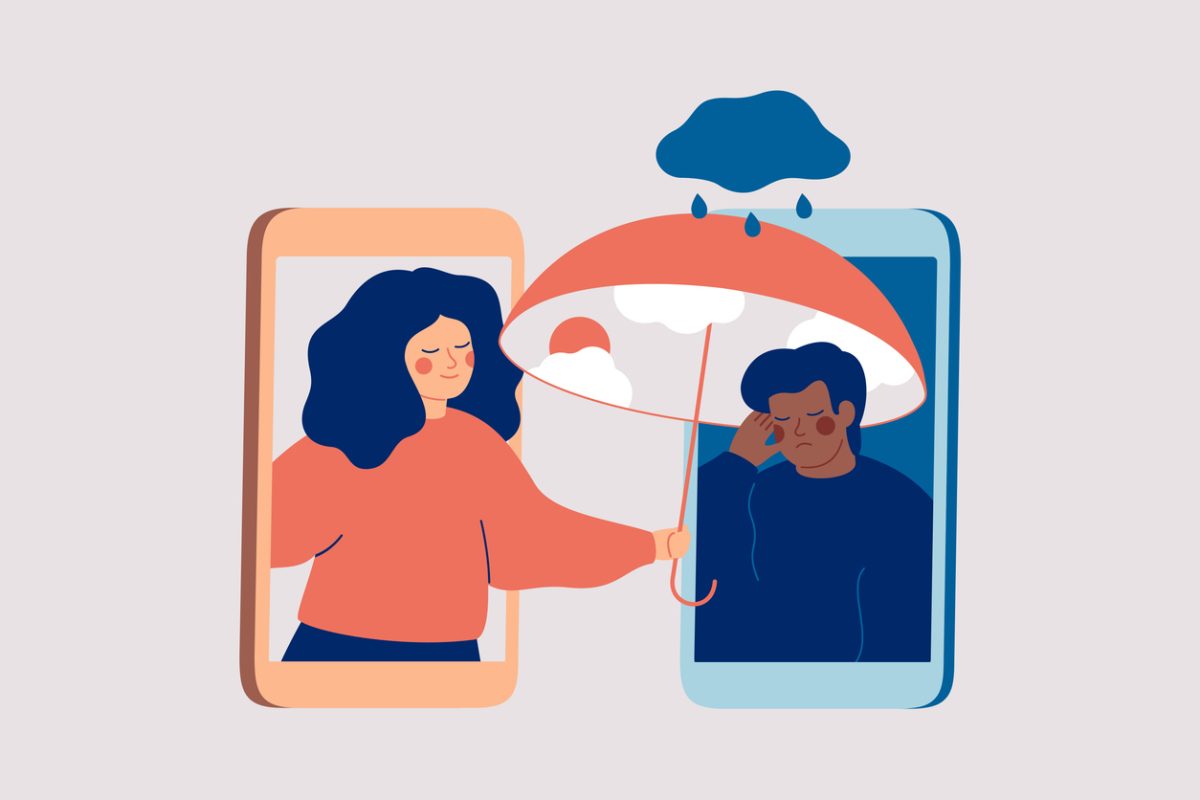
At 3:30am, my first alarm goes off. At 3:35am, another. Then 3:40am. Then 3:45am.
I wipe the sleep from my eyes. I am awake before the sun.
At 3:50, I peel my weary limbs from beneath the top sheet and shuffle toward the light switch. As a non-coffee drinker, artificial light is my only energy source.
At 3:51, I sit in a hardwood chair, the same one I used to sit in while struggling through high school algebra. Back then, the problems had answers. Now, I talk to people from all walks of life. The questions they bring aren’t so formulaic.
At 3:53, I open my laptop. The blue light cuts through the dim room, blending with the soft glow of the sconce above me. The screen feels both familiar and heavy. I log in.
At 3:55, I check in with my supervisor. A small ritual, a quiet signal that I’m here, present, ready, at least as ready as I can be.
At 4:00, I login to Salesforce, the platform we use to route incoming conversations. I switch my status from offline to available and hold my breath for the first alert. Each sound signals someone reaching out for support. Saturday through Wednesday, this is how I begin my day, monitoring the queue and getting ready to respond.
No two days are the same; no two people are the same. Every crisis is as unique as the person experiencing it.
According to the Centers for Disease Control and Prevention (CDC), suicide is a leading cause of death among both youth and adults in the United States. About 49% of people who die by suicide have a known diagnosed mental health condition, though many conditions go undiagnosed. Expanding access to timely mental health care can help reduce the risk of suicide.
These statistics are not abstract for me. After losing a childhood friend to suicide in December 2019, I was drawn to this work. In February 2021, I began volunteering with The Trevor Project, the nation’s leading suicide prevention organization for LGBTQ+ youth. By that summer, I became a full-time crisis counselor and would go on to work on both The Trevor Project crisis line and the 988 Suicide & Crisis Lifeline for the next three years.
Others came to this work through different paths, but often with the same pull toward community.
Adam V., who worked as a crisis counselor at The Trevor Project for three years, traced his path back to activism. As a queer organizer on his college campus at Seton Hall University, he saw firsthand what happens when people are given spaces and resources that affirm who they are.
“The community I belonged to was, and is, worth fighting for,” he said. “I knew after graduating that I wanted to continue to serve my community and make a meaningful impact.”
Lisa S., like Adam, worked as a crisis counselor at The Trevor Project for three years before moving into a managerial role. She took a different route that led to the same place. Her motivation grew out of years working with young people in education, where she often encountered warning signs, bullying, isolation, and family conflict, without always being able to intervene directly.
“As a crisis counselor,” she said, “I am positioned to be in that seat where I can directly provide support, a listening ear and actionable steps to help them get the support they deserve, as well as a safety plan to help them remain safe.”
Kae B., a former crisis counselor for three years and supervisor for two at The Trevor Project, was drawn to the work during the isolation of the COVID-19 lockdown. “I wanted to help people who were struggling during the lockdown and give back to my community,” they said.
For me and my colleagues, this work came to define our mornings. Conversations might last a few minutes or stretch into hours. The goal was never to “fix” someone’s life; it was to help them get through the moment, however long that took.
When those break-throughs came, they were the most rewarding moments of the job.
“When you spend an hour or more on a call, ensuring the other person has de-escalated and that they feel safer is one of the best feelings in the world” said Adam.
Lisa described it similarly, the moment when someone in an acute crisis begins to de-escalate, when the edge they were standing on starts to feel a little further away is so meaningful.
“Knowing that I was able to be in a space where a person found a way to remain safe, to feel supported, and to overcome a challenging time, is immensely rewarding and impactful,” she said.
But the work is not always the way people might imagine.
“One surprising aspect,” Lisa explained, “is that many people who reach out may not be in an active crisis, they just need someone to talk to.”
In those moments, the urgency looks different, but it still matters. Sometimes, that conversation is what prevents a crisis from escalating at all.
Kae pointed to another misconception: crisis counselors and therapists are not the same job, nor do they share the same training. For crisis counselors, the goal isn’t to unpack years of pain in a single conversation, it’s to help someone get through the next hour, and it was never meant to replace long-term mental health support.
The unexpected comes with the territory too. “Since I worked on the digital crisis counseling lines, unfortunately prank calls were a reality,” Adam said.
The challenge is that prank calls aren’t always obvious. Every call has to be treated as real, there’s no room to assume otherwise. I found myself hours into conversations that later revealed themselves to be pranks. What motivates someone to misuse a crisis line isn’t always clear. Sometimes it seems like boredom or curiosity; other times, it may be someone testing the waters for support but not ready to be honest about what they need. And at its worst, it can be intentional harm. In August 2022, as reported by The Advocate, The Trevor Project was targeted by individuals associated with 4chan who aimed to flood the lines so that people in real crisis couldn’t get through. When lines are tied up like that, it leaves someone in real crisis waiting, or worse, unable to connect at all.
That tension carries into another, harder reality of the work: even when calls are real, we can’t always help people through the moment. There are calls that don’t resolve cleanly, conversations where safety isn’t guaranteed, and moments that stay with you long after your shift ends.
“Working with individuals who are not receptive to my support, or who are not able to remain safe can be personally difficult and take an emotional toll,” Lisa said.
For those interested in going into the field and becoming crisis counselors, Lisa advised that they carefully consider how they will take care of their own well-being, given the intensity and nature of the work.
“It’s important to consider the personal toll and whether they have enough support, self-care approaches, and other forms of wellness to reduce burnout or compassion fatigue,” she said.
Adam echoed this sentiment, adding, “Show as much kindness and compassion to yourself if you decide to go this path,” he said. “You’re going to do life-saving work, and you deserve as much care as possible.”
Kae warned that one cannot pour from an empty cup, “If a crisis counselor does not have the ability to set boundaries, advocate for themselves & their health, and follow a self care routine, they will burn out,” they said. “Put your mask on before helping someone with theirs.”
At 4:02, the first chat of the day appears on my screen. I send our boilerplate welcome message and wait for a response.
On the other side of the screen, it could be anyone. As Adam noted, it could be police officers, activists, people serving in the military, students- crises don’t discriminate. They could be anywhere, going through something I have no immediate way of seeing, only what they choose to share in that moment. It’s a reminder that you never really know what someone is going through.
A response comes in.
Somewhere out there, someone else is awake too.
I start typing.
If you or someone you know is in crisis, you can call, text, or chat 988 to reach the Suicide & Crisis Lifeline, available 24/7. LGBTQ+ youth can also contact The Trevor Project at 1-866-488-7386 for confidential, 24/7 support.
*Note: Sources are identified by first name and last initial to protect privacy and safety.*